A derelict barn at the end of a rutted track looks like nothing much: a few sheets of corrugated iron, a stand of elder, a hinge rusted into a stump. Give it ten minutes and some attention, though, and it starts explaining itself. The herd that was sold. The roof that was patched twice before anyone gave up. The gateway widened for machines that never came back. Reading rural decay is mostly patience and a handful of reliable questions. Here are eight clues to start with.
Read the Ground Before the Buildings
The field has usually told you half the story before you reach a doorway. Rushes in a low corner mean water sitting where it shouldn't, so a drain has failed or a ditch has silted. Nettles mark fertility, and on old farms that often means a midden, a stock yard or a gateway where animals stood for decades. Bracken and scrub creeping across pasture suggest grazing withdrew and nothing has trampled it since.
Look, too, for the ghost of ploughing. Rippled ridge and furrow under permanent grass means the field was once worked by heavy plough teams and then left down to pasture — usually a long time ago. A straight, shallow track crossing a field to a gap that now leads nowhere is another giveaway: the route mattered once, and the reason for it has gone.
Collapsed Barns Tell You What the Farm Was For
Roofs fail first, then tie beams, then a gable, and the building's purpose is often still legible in what survives underneath.
Materials give you a rough date
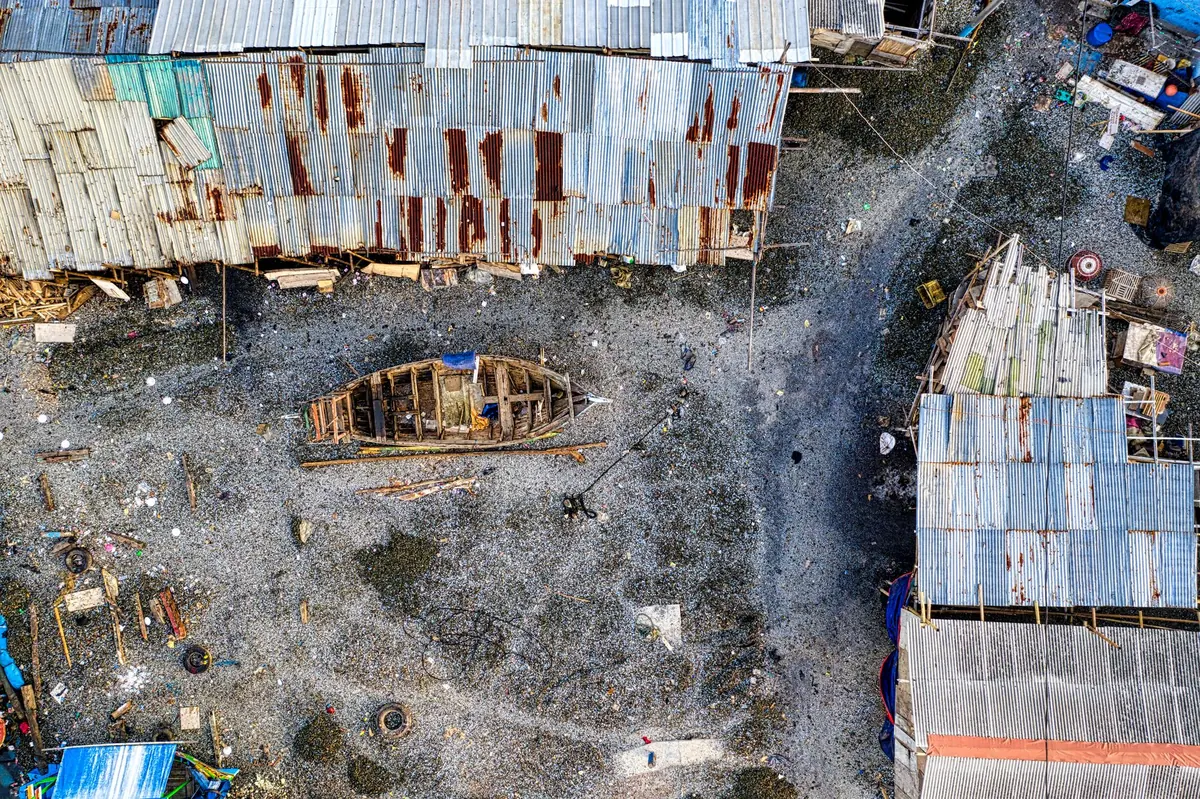
Welsh slate over a timber frame, clay pantiles, corrugated iron, asbestos cement sheeting. Each arrived with a different economy and a different era. Corrugated iron turns up constantly on buildings that were meant to be temporary and lasted seventy years. Concrete block walls with narrow ventilation slits say cow shed; a Dutch barn with open sides says loose hay and straw, which became redundant once big bales and silage clamps took over.
Read the alterations, not just the walls
A blocked doorway, a feed passage, tethering rings along a wall, a concrete apron and a gutter crossing a yard: these describe how animals moved and where labour was spent. A timber frame infilled with brick often marks a change of use, from storage to livestock housing. Additions are usually cheaper than the original building, so the crudest part of a structure is often the newest.
One firm rule: stay out. Asbestos cement is common on twentieth-century farm roofs and breaks easily. Floors rot, wells and slurry pits sit under grass, and collapses are unpredictable. If you own a site with suspect materials, have a specialist survey it before anyone disturbs it.
Rust as a Timeline
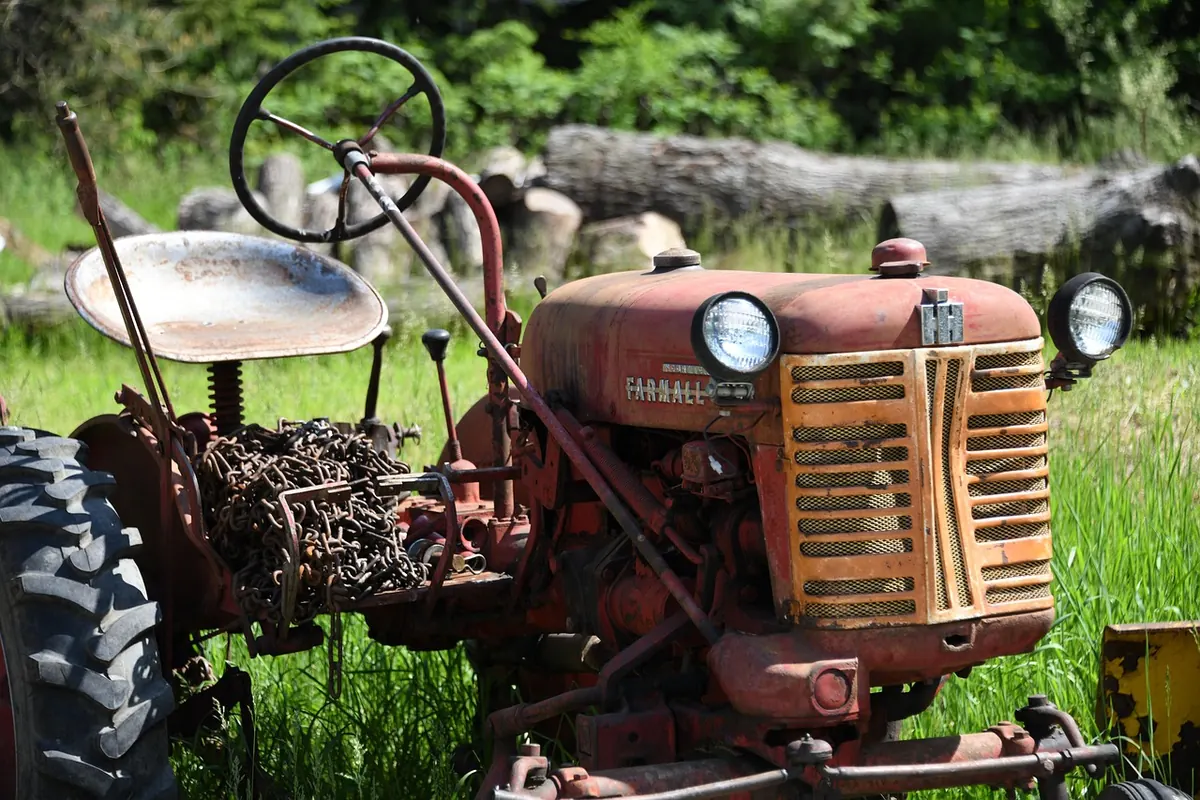
Machinery in a nettle bed is a stack of dates if you read it in layers. What sits nearest the door tends to be the last thing used; what lies deepest in the scrub is usually older. Cast iron, wooden frames and iron wheels generally point to the late nineteenth or early twentieth century. Rubber tyres, pressed steel and grey-painted tractors point mid-century and after.
Don't over-trust single objects. Farms hoard iron for repairs, and a rusty roller may be older than the shed beside it. Better evidence comes from what is missing: a workshop with empty brackets, a barn with no tools, a yard swept clean. Abandonment isn't always failure. Contractors took over work that small kit used to do, fields got bigger, and implements that suited ten acres became scrap. A mower left with its cutter bar still attached tells a slightly different story — that one stopped mid-season.
Hedgerows: the Slowest Record on the Farm
A species-rich hedge of hawthorn, hazel, field maple, dogwood and spindle is often older and more valuable than a single-species hawthorn run. Treat species counts as a hint, not a test: planting fashions varied, and a plain hedge can be old. More telling is management. A hedge grown into a line of trees, known locally as overstood, hasn't been laid or cut properly for decades. That usually means stock left the boundary.
Then look for hedges that have gone. A line of isolated mature trees, or a strip of rougher grass running across a field, is a removed boundary. Field enlargement leaves these traces behind, and the sward either side often changes with the soil and drainage the hedge once sheltered.
Trackways, Gateways and the Shape of Movement
Tracks are blunt about purpose. A lane sunk well below field level has been worn by feet, hooves and cartwheels over centuries. A straight, hardcore track with brick and tile in it is modern. Both can run to the same yard, one after the other.
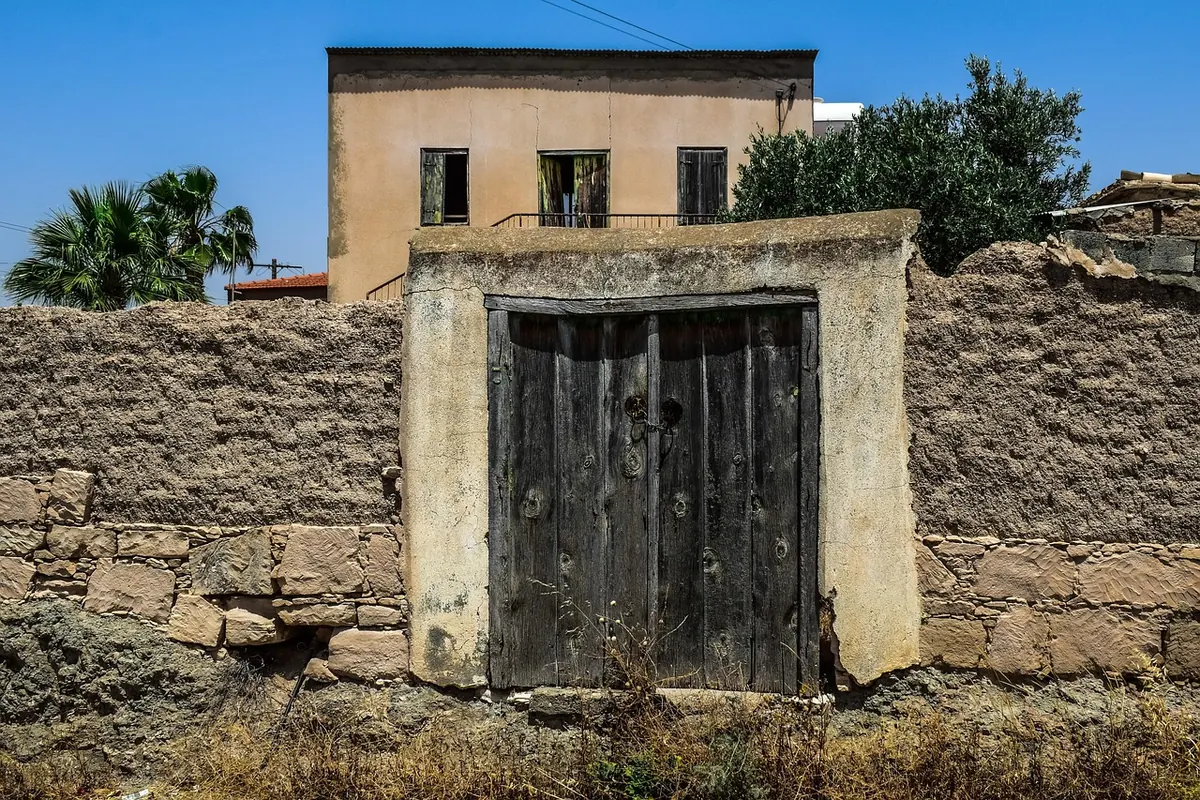
Gateways are the most readable feature on any farm. Stone piers with rusted hinges and no gate mark a route that stopped mattering. A row of narrow gateways suggests fields once subdivided for grazing; one enormous gateway suggests machinery. A stile with a worn path on one side and nothing on the other is a footpath that has been lost or diverted. Railway sleepers bridging a ditch, granite setts under mud, a culvert with a broken headwall — all worth noting and photographing.
A Method You Can Use in Half an Hour
You don't need a survey licence to read a site well. Work in this order and you'll avoid the usual mistake of starting with the buildings and guessing from there.
- Walk the boundary first. Hedges, walls, banks and ditches give you age and management at a glance.
- Note every gateway and where each one points.
- Stand back and sketch the layout. Yards, slopes and prevailing wind explain more than any single structure.
- Date roof materials from a safe distance, not close up.
- Group the machinery into three rough piles: large field kit, small hand kit, stationary engines.
- Then read the ground, looking for nettles, rushes, ridge and furrow and ghost boundaries.
- Write as you go, with the date and the weather. Photographs catch texture; notes catch sequence.
Aim for a rough order of events rather than a conclusion: what was done here, when it stopped, and what replaced it somewhere else.
Before You Go: Access, Safety and Notes
- Most farmland is private, and a right of way rarely covers yards or buildings. Ask the landowner or tenant first.
- Leave gates as you find them, keep dogs under control and don't climb over walls where a gate exists.
- Stay out of buildings and never enter a slurry store, silo or pit area. Check your tetanus cover with a GP if you're unsure.
- Boots, gloves, a torch and someone who knows your route are more useful than a better camera.
- Ask before publishing anything that identifies a working farm, and never dig or detect without permission. Archaeological sites can be legally protected.
- If a site is yours and you're planning work near suspect materials or doubtful structures, take professional advice before touching anything.
Read slowly, then. Rural decay rewards the walker who stops, looks back and asks why that gap is there.
Photo: eliza28diamonds / Pixabay